LAST UPDATE: 17JUNE2026

🎖️[VETERANS]🎖️
BUSINESS & CAREER
SUPPORT
CHOOSING YOUR SUPPORT PATH
ROLES COMPARED
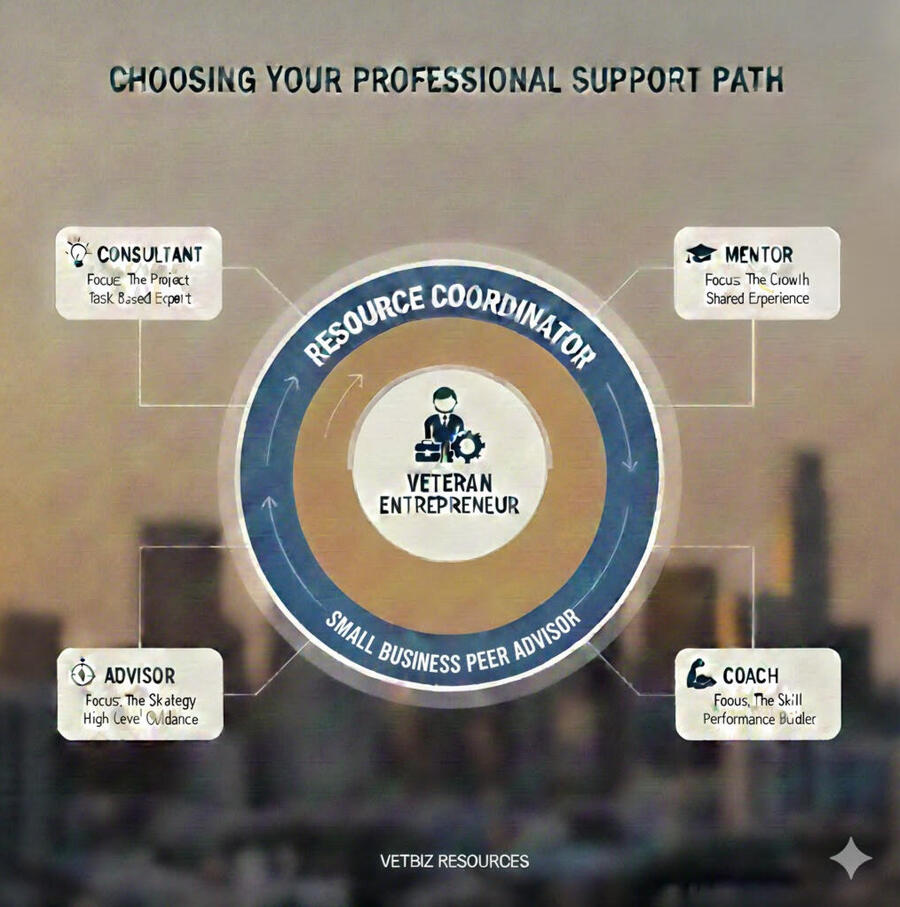
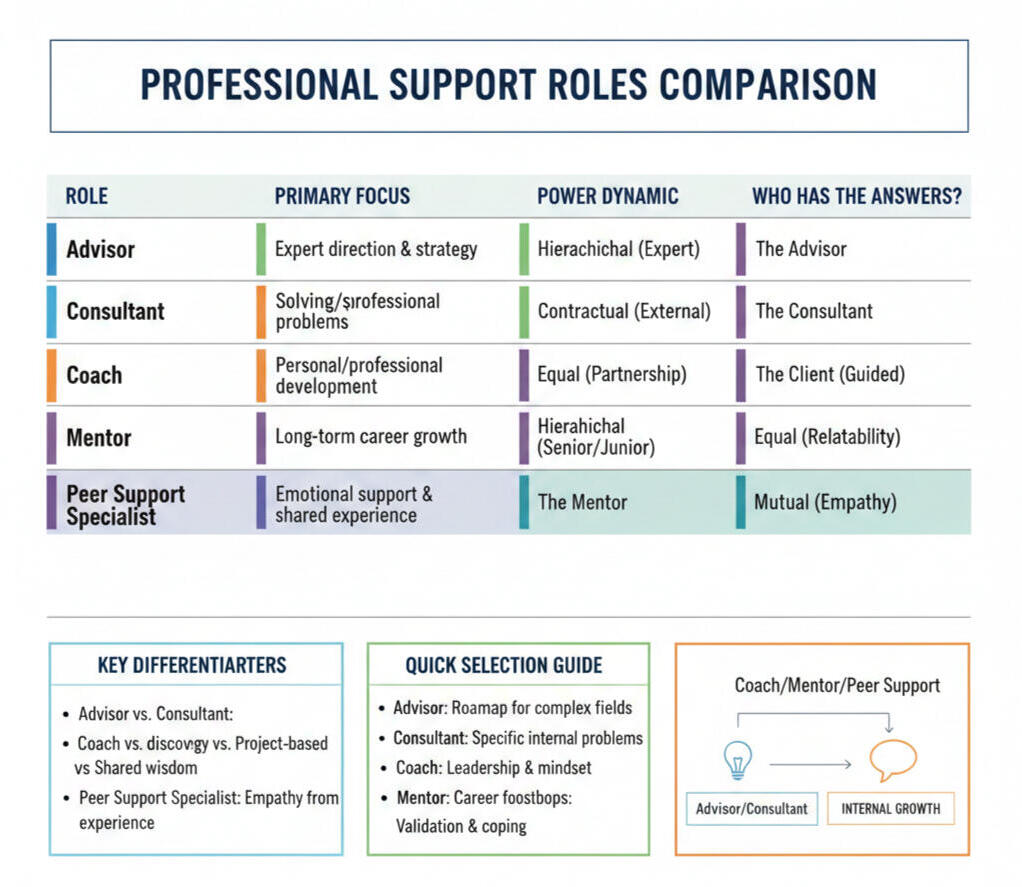
Choosing between support roles depends on your current mission: advisors act as "subject matter experts" providing specific recommendations on technical hurdles like legal or tax issues. Consultants are the "special operators" you hire to execute a task or fix a broken process for you. Coaches use tactical questioning to help you develop your own leadership skills, while mentors offer long-term, often pro bono wisdom based on their own "lived experience" in the field. Finally, peer support specialists provide "foxhole camaraderie," offering relatable emotional support and shared resources from someone currently walking the same path as you.
STRATEGIC SUPPORT SOLUTIONS
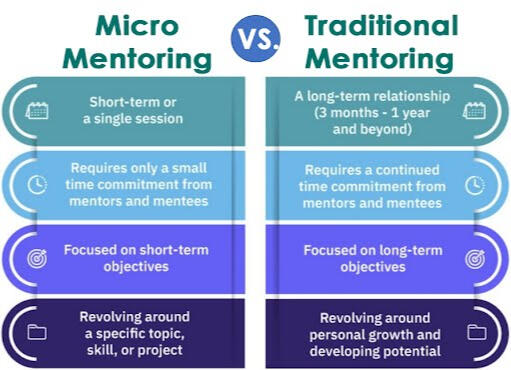
For veteran entrepreneurs looking to launch or scale their businesses, resources like SCORE, SBA, Vetrepreneur, American Corporate Partners, MilMentor, and MicroMentor provide foundational, cost-free support.SCORE, a resource partner of the U.S. Small Business Administration, offers a dedicated "Hub for Veteran Entrepreneurs" where veterans can access free, one-on-one business mentoring from experienced professionals, many of whom are veterans themselves. They provide specialized "Veterans Fast Launch" initiatives that include free software and business tools to help bridge the transition from military service to business ownership.Similarly, MicroMentor (and the veteran-specific platform MilMentor) operates as a massive, free online community that connects entrepreneurs with volunteer mentors worldwide. These platforms allow veterans to bypass traditional gatekeeping, offering unlimited on-demand calls to discuss business plans, marketing strategies, or financial troubleshooting without any cost or long-term commitment.While Vistage is primarily known as a high-level, fee-based peer advisory and executive coaching organization for established CEOs, it contributes to the veteran community through specific outreach and knowledge-sharing rather than a "free" membership model. Vistage frequently publishes high-value research and "Veteran-Owned Business" guides that are accessible to the public, focusing on leadership development and the unique challenges of military-to-civilian business transitions.Additionally, many Vistage chairs (the executive coaches who lead peer groups) are veterans who offer pro-bono speaking engagements or local workshops for veteran-focused non-profits.Together, these three resources create a pipeline: SCORE and MicroMentor offer the free, essential building blocks for startups, while Vistage provides the advanced leadership frameworks for those ready to scale into multi-million dollar enterprises.

SCORE
SCORE provides veteran entrepreneurs with free, lifelong business mentorship and specialized resources to bridge the gap between military service and business ownership. Through its Veteran Entrepreneurs Hub, the program offers expert guidance on navigating government contracts, securing funding, and translating leadership skills into market success. Whether starting or scaling, veterans gain access to a national network of mentors, including fellow veterans who understand their unique challenges.
SBA
The SBA empowers veteran entrepreneurs through targeted training, capital, and federal contracting. Key programs include Boots to Business, providing foundational training to transitioning members, and Veterans Business Outreach Centers (VBOC) for local mentorship. The SBA also manages VetCert, certifying veteran-owned firms for exclusive set-aside contracts. Additionally, the Veterans Advantage program reduces loan fees to help veteran small businesses secure essential funding.
VETREPRENEUR
Vetrepreneur specializes in guiding veterans and military spouses toward business ownership through its flagship Franchise Academy. This free, 10-week program uses a structured 10-step process to match veterans with proven franchise models that align with their leadership styles and financial goals. By providing one-on-one coaching from experienced veteran mentors, the program helps candidates navigate due diligence and secure funding with confidence and military precision.
AMERICAN CORPORATE PARTNERS
American Corporate Partners (ACP) offers ACP Ventures, a specialized program providing post-9/11 veterans and military spouses with year-long, one-on-one mentorship from industry experts. Designed for those starting or scaling a business, the program covers business planning, marketing, and operations. Participants also gain access to the ACP Village, a real-time networking community, and over 130 on-demand business courses to ensure long-term entrepreneurial success.
MILMENTOR
MilMentor is a free, on-demand mentorship platform designed specifically for the military community, including veterans and spouses. It connects aspiring entrepreneurs with experienced founders and business operators who have successfully launched ventures in sectors like tech, gov-con, and e-commerce. Through one-on-one video or phone calls, mentors provide real-world advice on refining business ideas, navigating funding, and scaling operations with no long-term commitment.
MICROMENTOR
MicroMentor, a Mercy Corps initiative, is a global online platform that connects veteran entrepreneurs with volunteer business mentors at no cost. While serving all small business owners, it is a powerful tool for veterans to find industry-specific guidance on business planning, marketing, and financial strategy. The platform allows veterans to filter for mentors with military backgrounds or expertise in specialized sectors like gov-con and tech, facilitating high-impact, one-on-one professional growth.
50 STRONG MENTOR
50strong Mentor is a dedicated on-demand networking platform designed to improve employment outcomes for the military-affiliated community. By connecting transitioning service members, veterans, and military spouses with industry professionals, the site facilitates personalized 1-on-1 video conversations. This low-barrier resource allows jobseekers to gain career insights, company-specific guidance, and professional feedback. Partnering with top employers and universities, 50strong empowers users to build meaningful civilian career pathways through direct, impactful industry connections.

PIONEER HUMAN SERVICES
The INVEST Program (Incarceration to New Ventures: Elevating Success Together), run by Pioneer Human Services, specifically supports justice-involved veterans in rebuilding their lives through entrepreneurship. Specifically designed for justice-involved individuals, this program helps veterans elevate their success through entrepreneurship. It includes hands-on training, pitch sessions for feedback, and ongoing coaching. Veterans benefit from structured classes, pitch sessions with leaders, and two years of wraparound support to ensure long-term stability.

VISTAGE
Vistage provides CEOs and business owners with high-level executive coaching and peer advisory boards. Unlike early-stage programs, Vistage focuses on scaling established businesses through confidential groups of 12–16 non-competing leaders. Veterans leverage their military leadership in a "civilian advisory board" setting, utilizing one-on-one coaching and proprietary issue-processing to make better strategic decisions and grow their companies up to 2.2x faster.

GROWTHMENTOR
GrowthMentor is an on-demand networking platform that connects veteran entrepreneurs with the top 5% of growth marketing and startup experts. While not exclusively for veterans, it serves as a high-speed "tactical operations center" for those scaling digital businesses. Veterans can book 1:1 video calls with vetted mentors to solve specific bottlenecks in user acquisition, SEO, and product-led growth, allowing them to apply military-grade focus to their company’s scaling phase.
BUSINESS
TRAINING & SUPPORT
Here you should find a comprehensive suite of training and support resources designed to help veterans launch, manage, and scale professional ventures. We provide a clear roadmap for success by prioritizing strategic stability, financial literacy, and operational efficiency. Through expert-led training and specialized mentorship, we empower individuals to transform innovative concepts into profitable companies while refining the executive skills necessary for long-term career advancement.Whether you are a startup founder building from the ground up, an established business owner looking to expand your market reach, or a professional seeking to enhance your corporate leadership, our programs bridge the gap between your prior experience and private sector excellence. By providing access to high-level peer networks and practical growth tools, we ensure you have the support needed to navigate complex industry landscapes and build lasting economic independence.

INSIGHTS & INFORMATION
(Business Tools)
Our business resources provide the essential insights needed to launch, manage, and grow professional ventures. We offer startups the tools to build from the ground up, assist established owners in scaling operations through financial and market analysis, and help professionals refine the leadership skills necessary for executive advancement. By prioritizing strategic planning and networking, we ensure every individual can navigate the private sector and build a lasting professional legacy.
Disclaimer: External Sites and ServicesThis platform may contain links to, or integrations with, third-party websites, applications, or services that are not owned or controlled by us. We provide these connections solely for your convenience and do not endorse, warrant, or assume responsibility for the content, privacy policies, or practices of any external provider. Once you leave our interface or engage with a third-party service, your interactions are governed by that entity’s specific terms of use and data protection policies. We strongly encourage you to review the legal agreements of any external site you visit. We shall not be held liable, directly or indirectly, for any damage or loss caused or alleged to be caused by or in connection with the use of or reliance on any content, goods, or services available through such external platforms. Accessing third-party resources is done entirely at your own risk and discretion.
ROLES COMPARED
Choosing the right support depends on whether you need a partner, a teacher, or a technician.THE UNIVERSAL ROLES* Advisors provide high-level, strategic "what to do" guidance based on professional expertise.* Consultants are specialized "fixers" who often do the work (e.g., marketing audits) for you.* Coaches use discovery to "pull out" answers, focusing on performance and accountability.* Mentors offer long-term "been there, done that" wisdom, often for free.* Peer Specialists provide "in the trenches" camaraderie and shared lived experience.
Regardless of your path, you will hit these specific "symptoms." Here are examples of when to deploy each support type:* Business Peer Support (The Foxhole): Use this immediately. Whether you are transitioning from a shelter, a cell, or a 20-year corporate career, you need people who speak "Veteran." They provide the emotional resilience needed when civilian life feels alien or hostile.* Business Mentors (The Scout): Use them for direction. If you have an idea but don't know if it's viable in 2026, a mentor provides the "reconnaissance" to tell you if the market is clear or mined with risks.* Legal Advisors (The Specialist): Use them for legality. If you have a record, an advisor (legal or tax) is non-negotiable to help you navigate disclosure requirements or licensing hurdles.* Business Coaches (The Drill Sergeant): Use them for discipline. If you’ve lost the "edge" or are struggling with the lack of structure in civilian life, a coach helps you build a new personal battle rhythm.* Business Consultants (The Attachment): Use them for technical gaps. If you don't know how to build a website or manage digital accounting, you hire a consultant to do that specific "op" so you can stay focused on the mission.
Determining when to engage specific support roles requires a strategic assessment of your business’s current "operating environment." In the early discovery phase, a veteran entrepreneur should prioritize mentors and peer support specialists. Mentors provide the long-term, strategic "commander’s intent" based on their own past successes and failures, helping you avoid common pitfalls without the pressure of a financial contract. Simultaneously, peer support specialists act as your frontline unit; they are fellow veterans currently in the trenches of entrepreneurship who can offer immediate, relatable advice on navigating the transition from military structure to the ambiguity of a startup.As your business moves into the execution phase, the need shifts from broad wisdom to technical precision, making advisors and consultants essential. You should utilize an advisor when you need "over-the-horizon" specialized knowledge, such as navigating complex government contracting regulations (GovCon) or intellectual property law. Conversely, a consultant should be deployed when you have a specific, time-sensitive task that your current team cannot execute—such as setting up a CRM system or conducting a market feasibility study. While advisors provide the map, consultants are the boots on the ground hired to complete a specific objective.Throughout the entire lifecycle of your venture, coaches should be utilized as a tool for personal and professional development. Unlike a mentor who tells you what they did, a coach uses structured questioning to help you uncover your own leadership style within a civilian context. This is particularly vital for veterans who may need to adapt their "command and control" military background into a more collaborative "servant leadership" approach. You should engage a coach when you feel a plateau in your personal performance or when your business’s growth is outpacing your current management capabilities.
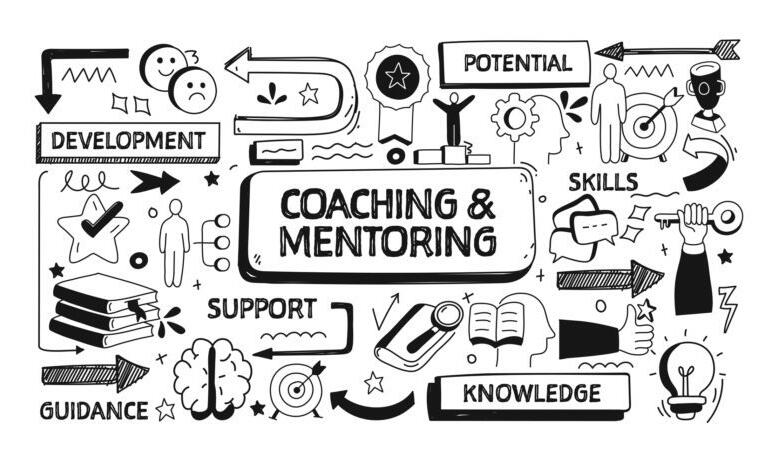
The key to a successful support ecosystem is recognizing that these roles are dynamic and fluid, not static appointments. For example, a consultant you hired to fix your supply chain might transition into an advisor role as they join your Board of Advisors. Similarly, a peer support specialist who scales their business faster than yours might become a formal mentor. A veteran entrepreneur must remain agile, constantly evaluating their "internal readiness" versus "external threats" to decide which role to activate. There is no rank structure here; you are the Commanding Officer, and these roles are your specialized attachments to be utilized as the mission dictates.Finally, the timing of these engagements should be dictated by your Resource Management Plan. Early on, focus on pro-bono or low-cost resources like SCORE mentors or VBOC peer groups to preserve capital. As your revenue stabilizes, reinvest in high-impact consultants or executive coaches through organizations like Vistage to sharpen your competitive edge. By treating these roles as a modular toolkit rather than a fixed staff, you can scale your support network in tandem with your business's complexity, ensuring you always have the right expertise in the right position at the right time.
A specific guide for veteran entrepreneurs that respects the diversity of your circumstances:IDENTIFY YOU CURRENT "DISPOSITION"Before looking at business roles, assess your immediate environment.* Re-entry/Justice-Involved: Look for the SBA’s "federal bonding" programs which can provide insurance for businesses hiring (or started by) those with a record.* Housing Instability: Prioritize the HUD-VASH or SSVF programs to stabilize your living situation first; business growth is nearly impossible without a secure "home base."* Long-term Veterans: Your network may be dated. Your primary goal is modernizing your digital presence and re-connecting with the current veteran business ecosystem.---TACTICAL RESOURCE CHECKLIST (No Matter the Background* [ ] Verify Eligibility: Even if you lost your original papers, use the VA's eBenefits portal to get your proof of service. Most programs require "Other Than Dishonorable" status.* [ ] Skill Inventory: Don't just look at your MOS. Look at your capacity for risk, your ability to follow complex SOPs, and your resilience. These are your actual "startup capital."* [ ] Local VBOC Contact: Every state has a Veterans Business Outreach Center. They are trained to handle "non-traditional" veteran paths, including those with barriers to entry.* [ ] Low-Overhead Models: If capital is low, start with service-based businesses or digital "solopreneur" models that don't require heavy debt or physical storefronts.
The 2026 VBOC Expansion: Localized Support for Global Growth" (SBA, Jan 2026) An official review of the SBA’s expanded network of Veterans Business Outreach Centers and their 2026 focus on procurement-ready mentorship.
SCORE

When reviewing SCORE (Service Corps of Retired Executives) through the lens of the diverse veteran community, it is essential to look past the "corporate transition" marketing and evaluate how the program actually functions for those starting from the margins. For a veteran entrepreneur—whether they are navigating life after incarceration, managing a service-connected disability, or recovering from housing instability—SCORE represents a massive, free, but highly variable "logistics hub" for business knowledge.For veterans in recovery or re-entering society after incarceration, SCORE’s greatest strength is its price point: $0. When capital is non-existent and your "credit" in the civilian world is damaged, the ability to sit down with a seasoned professional without a consulting fee is a significant barrier-remover. Many SCORE chapters have begun to focus on "inclusive entrepreneurship," recognizing that for a justice-involved veteran, a small business isn't just a career—it’s a life-sustaining alternative to a traditional job market that may still be closed to them.However, the "Retired Executive" aspect of SCORE can be a double-edged sword for low-income or homeless veterans. There is occasionally a "relatability gap" between a mentor who spent 40 years in a C-suite and a veteran currently living in transitional housing trying to launch a landscaping business. While the mentor has the high-level financial strategy, they may lack the "boots-on-the-ground" empathy for the survival-level challenges—like lack of reliable transportation or a permanent mailing address—that the veteran is currently facing.For veterans with physical or mental disabilities, SCORE has pivoted effectively toward remote accessibility. The platform offers video mentoring and a vast library of on-demand webinars that allow a veteran with mobility issues or social anxiety to engage from a safe, controlled environment. Some users have reported, however, that the quality of "disability-conscious" mentoring varies by chapter; while some mentors are incredibly adept at helping a veteran adapt their business model to their physical limits, others may inadvertently push for "hustle culture" benchmarks that aren't realistic for someone managing chronic pain or PTSD.
For the unemployed veteran, SCORE functions as a "bridge to a mission." Military service provides a deep-seated need for a defined objective, and unemployment can erode that sense of purpose. A SCORE mentor provides the "Operations Order" (OpOrder) for a business, giving the veteran a structured set of tasks to execute. This structure is often what prevents the "stalling out" that occurs when a veteran feels overwhelmed by the ambiguity of civilian life.The program’s Veteran Entrepreneurs Hub is a curated starting point, but the true experience is determined by the "match." A veteran should be encouraged to "interview" their mentor. If you are a veteran coming from a background of drug recovery, you need a mentor who values resilience and discipline over someone who only understands spreadsheets. SCORE’s national network is large enough that if the first mentor doesn't understand your unique background—whether that's the "foxhole" of homelessness or the "wire" of prison—you have the right to request a "transfer" to someone who does.SCORE is a powerful, democratized resource that offers a "baseline of intelligence" for any veteran entrepreneur. It isn't a silver bullet, and it requires the veteran to be the "Commanding Officer" of their own progress. For those starting from the hardest circumstances, SCORE provides the "intel" and the "map," but the veteran must still be the one to clear the path.
SBA
The Small Business Administration (SBA) functions as a massive network of "force multipliers" that decentralizes support through Veterans Business Outreach Centers (VBOCs). This structure allows veterans to access high-level business intelligence regardless of their current housing status or geographical location. For veterans whose paths include incarceration, homelessness, or recovery, the SBA is less about a single office and more about providing a framework to rebuild a life through ownership.For veterans re-entering society from prison, the SBA’s Boots to Business Reboot is a critical asset. While the standard version is tied to active-duty installations, the "Reboot" version is delivered directly in local communities. This accessibility is vital for justice-involved veterans who may be restricted by parole or limited travel. The program helps shift the mindset from "returning citizen" to "CEO," teaching the fundamental "battle drills" of business—market research, legal structures, and financial literacy—without requiring a traditional corporate background.Those experiencing homelessness or extreme poverty find the most relevance in the SBA’s Microloan Program and Community Advantage loans. These programs are intentionally designed for businesses that "don't fit" the strict criteria of major commercial banks. By offering smaller amounts of capital (up to $50,000) combined with required technical assistance, the SBA provides a "mentorship-plus-money" approach. This is essential for a veteran who may lack collateral or a stable credit history, providing a tangible ladder out of instability through self-employment.Veterans managing physical or mental disabilities, including service-connected PTSD or TBI, find a dedicated advocate in the VetCert program and the Service-Disabled Veteran-Owned Small Business (SDVOSB) designation. This certification acts as a "market equalizer," granting exclusive access to a portion of federal contracting dollars. For a veteran whose disability might make a traditional 9-to-5 job difficult, owning a business that services government contracts allows for a flexible "operating environment" where they control the pace and structure of their work.
For veterans in drug or alcohol recovery, the SBA provides the structure that is often the cornerstone of a successful sober life. Entrepreneurship requires a high level of accountability, and the SBA’s Resource Partner network (SBDCs and VBOCs) provides a team of "accountability partners." These counselors don't just help with business plans; they help veterans build a sustainable professional life that supports their personal health and long-term sobriety.The primary critique of SBA programs is the bureaucratic complexity. Navigating the "System for Award Management" (SAM.gov) or applying for "VetCert" can feel like a secondary military enlistment. For a veteran struggling with unemployment or mental health challenges, this "red tape" can be a significant deterrent. However, this is where VBOC counselors act as "administrative scouts," doing the heavy lifting to guide you through the paperwork so you can focus on your mission.Ultimately, the SBA’s value lies in its democratization of opportunity. Whether you are a newly discharged officer or a veteran who has spent years on the street or behind bars, the SBA recognizes your service as the primary qualification. It provides the "standard operating procedure" for business ownership, ensuring that any veteran with the discipline to follow the plan has a shot at building a legacy.
Navigating the 2026 SBA Mentor-Protégé Program" (SBA Events) This guide explains the dual SBA and Department of Defense (DoD) programs that pair smaller veteran-owned businesses with large prime contractors to win significant government contracts.
VETREPRENEUR
Vetrepreneurship, as a movement and a collection of dedicated programs, acts as a bridge for those who find traditional employment inaccessible due to their background or current situation. For veterans emerging from incarceration or homelessness, these programs offer more than just business training; they offer a restoration of identity. By focusing on the "vetrepreneur" mindset, these initiatives validate the grit and resourcefulness developed during service, reframing a veteran's past struggles—including time spent in the justice system—as evidence of resilience rather than a permanent badge of shame.Programs specifically under the Vetrepreneur umbrella often prioritize low-barrier entry points, which is vital for veterans in drug recovery or those struggling with unemployment. When a veteran is rebuilding their life, they don't always have the "clean" resume required by corporate recruiters. Vetrepreneurship programs bypass the traditional gatekeepers by focusing on the "Mission-Ready" aspect of the individual. They provide a structured "Base of Operations" where a veteran can learn to monetize a skill—be it a trade, a service, or a digital product—without needing to explain gaps in their employment history.For veterans managing physical or mental disabilities, Vetrepreneurship is often the only viable path to professional fulfillment. Many veteran-owned business programs emphasize the "lifestyle design" aspect of entrepreneurship, teaching veterans how to build businesses that accommodate their needs. Whether it's a veteran with PTSD who needs a quiet, controlled work environment or someone with physical mobility issues who requires a remote-first model, these programs provide the tactical guidance to build a business around the person, rather than forcing the person to fit into a rigid corporate structure.The community aspect of Vetrepreneur programs provides a "foxhole mentality" that is essential for those who have felt isolated by homelessness or long-term unemployment. The peer-to-peer mentoring often found in these circles creates a safe space where a veteran can admit to "taking fire" in their personal life without fear of judgment. This shared language and common background help to dismantle the social anxiety that often accompanies a transition from a marginalized background, replacing it with a sense of belonging to a professional unit once again.
However, the "hustle" culture often associated with entrepreneurship can be a risk for veterans in early recovery or those with severe mental health challenges. A strong Vetrepreneur program balances its technical training with "mental health check-ins," ensuring that the stress of starting a business doesn't trigger a relapse or a health crisis. The best programs are those that integrate wellness and "Self-Care SOPs" into their curriculum, recognizing that the veteran is the business’s most valuable—and most vulnerable—asset.The financial guidance within these programs is particularly transformative for low-income veterans. Instead of focusing solely on high-growth venture capital, many Vetrepreneur initiatives teach "bootstrapping" and "lean startup" methods. This is critical for someone who may not have a "friends and family" round of funding to fall back on. By teaching how to generate revenue immediately with minimal overhead, these programs provide a faster route to financial independence and housing stability than many traditional job-placement services.Ultimately, Vetrepreneur programs serve as a "Re-integration Center" for the modern era. They don't care if you've been in a cell, a shelter, or a boardroom; they only care if you are willing to follow the "Operations Order" to build your own future. For the veteran who has been told "no" by the civilian world, these programs offer a definitive "yes," providing the tools to turn their service-honed discipline into a self-sustaining legacy.
AMERICAN CORPORATE PARTNERS
American Corporate Partners (ACP) offers a high-touch, long-term approach to business mentorship that can be particularly grounding for veterans who are navigating extreme life transitions. Unlike platforms that focus on quick, one-off advice, ACP requires a year-long commitment to a single mentor. For a veteran coming from homelessness or housing instability, this consistency provides a rare "anchor" in an otherwise chaotic environment. Having a corporate professional dedicated to your success for 12 months creates a reliable point of contact that can help rebuild the professional confidence often eroded by the struggle for basic survival.For veterans re-entering society from prison, ACP’s dedicated "ACP Ventures" entrepreneurship program is a powerful tool for professional re-branding. The program pairs veterans with mentors from Fortune 500 companies—individuals who are trained to look past a "record" and focus on the veteran's potential as a business owner. This year-long relationship allows the justice-involved veteran to slowly build a new professional narrative, learning the nuances of business management and corporate etiquette that are essential for scaling a business beyond the "entry-level" stage.The program is a game-changer for unemployed veterans or those with low-income status due to the caliber of the network it provides. ACP is completely free, yet it grants veterans direct access to mentors from companies like Disney, Wells Fargo, and Amazon. For someone who lacks a traditional "professional network," this is a massive leap forward. It bypasses the gatekeepers of the job market and business world, placing a veteran who might be struggling to pay rent in a direct conversation with a VP-level executive who can provide high-level strategic advice on business finances and customer acquisition.For those in drug or alcohol recovery, the structure and regular "check-ins" from an ACP staff member provide an added layer of accountability that supports a sober lifestyle. Entrepreneurship can be a trigger for stress, but having a designated mentor to "run ideas by" prevents the feeling of being overwhelmed that often leads to relapse. The ACP staff acts as an "administrative scout," monitoring the relationship to ensure it remains productive and supportive, which is vital for veterans who may be managing fragile personal health alongside a new business venture.
Veterans dealing with physical or mental disabilities (such as TBI or service-connected PTSD) find the personalized pairing process especially beneficial. During the orientation call, ACP staff take the time to understand the veteran's "specific circumstances," including how their health affects their work. They then hand-select a mentor who is willing and able to work within those parameters. This ensures the veteran isn't pushed into a "standard" corporate mold but is instead supported in building a business that accommodates their physical or psychological needs.One of the unique strengths of the "ACP Village" for all veteran backgrounds is the real-time interaction with a community of supporters. If a veteran is "taking fire" in their business—whether it's a marketing crisis or a supply chain issue—they can turn to the Village for on-demand advice. This "foxhole camaraderie" is especially important for veterans who have felt marginalized, as it reminds them they are part of a larger, elite unit of entrepreneurs who are all working toward the same mission of professional success.In summary, American Corporate Partners is a premier "stabilization and growth" tool for the diverse veteran community. It doesn't matter if you are starting from a shelter, a cell, or a long period of unemployment; ACP treats your service as your primary credential. By providing a year of consistent, high-level mentorship, it gives every veteran the "long-range reconnaissance" and strategic support they need to turn their unique life experiences into a successful, sustainable enterprise.
MILMENTOR
MilMentor acts as a high-speed "digital tactical operations center" for the modern veteran entrepreneur, uniquely designed to bypass the traditional gatekeeping and long wait times of legacy mentorship programs. For a veteran coming from homelessness or housing instability, the platform's "on-demand" nature is its most critical feature. When your life is in flux, you cannot always commit to a six-month structured program. MilMentor allows you to book a single, high-impact 30-minute call whenever you have the stability and connectivity to do so, providing immediate "intel" without the burden of long-term administrative overhead.For veterans re-entering society from prison, MilMentor offers a way to "re-professionalize" their network without the fear of judgment often found in local business circles. The platform’s algorithm connects users with mentors who have specifically indicated a desire to help the military community. This creates a "safe operating environment" where a justice-involved veteran can speak with a successful founder or business owner about how to navigate the stigma of a record or how to leverage the resilience they built "behind the wire" into a competitive business advantage.The platform is particularly transformative for veterans managing unemployment or low-income status. Because the service is 100% free and does not require a paid subscription, it provides a "no-cost entry" into high-level business circles. A veteran who may not even have the funds for a business suit or a professional office space can still connect via phone or video with executives and founders from Fortune 500 companies or successful startups. This levels the playing field, ensuring that "who you know" is no longer a barrier to those starting from the bottom of the economic ladder.For those in drug or alcohol recovery, MilMentor provides the "mission-focus" and peer-to-peer accountability that are often essential for maintaining sobriety. Entrepreneurship can be an isolating journey, which is a dangerous state for someone in recovery. By allowing a veteran to "pick their own mentor," they can find someone who values the discipline and resilience they are currently building. These conversations provide a professional "lifeline," reminding the veteran that their past struggles are a foundation for future success, rather than an anchor holding them back.
Veterans dealing with physical or mental disabilities (such as PTSD or mobility challenges) benefit from the platform's "remote-first" architecture. There is no requirement to travel to a physical office or attend a crowded networking mixer. A veteran can conduct their "business reconnaissance" from the comfort and safety of their own home, allowing them to build a business model that accommodates their specific health needs. Whether they need advice on building a remote agency or a service-disabled veteran-owned small business (SDVOSB), the mentors on the platform provide the "SOPs" (Standard Operating Procedures) to make it happen.The primary value of MilMentor lies in its unlimited accessibility. Unlike programs that assign you a single mentor who may or may not understand your specific background, MilMentor allows you to "rotate your attachments." If you need a marketing expert today but a legal advisor tomorrow, you can book both. This modular approach is perfect for veterans whose lives are in transition; it allows them to scale their support network at the exact pace of their personal and professional recovery.In summary, MilMentor is a democratization of the "old boy's network." It takes the elite connections usually reserved for top-tier MBA programs and makes them available to every veteran—from the one in a shelter to the one in a corporate office. It is a tool of empowerment that respects the diversity of the veteran experience, providing a direct link to the "civilian scouts" who can help you navigate the terrain ahead, regardless of where you started.Would you like me to help you draft a specific "Mission Statement" to put in your MilMentor profile to attract the best mentors for your current situation?
MICROMENTOR
MicroMentor provides a unique, "open-market" approach to business mentorship that is particularly valuable for veterans who may feel alienated by traditional, highly structured veteran service organizations. For a veteran coming from a marginalized background—such as homelessness or drug recovery—MicroMentor’s global reach and informal structure act as a low-pressure entry point into professional networking. Because it is a free, self-service platform, it removes the "administrative gatekeeping" that often requires veterans to provide extensive documentation or prove their "readiness" before they can speak to an expert.For veterans re-entering society from prison, MicroMentor offers a level of anonymity and "resetting the clock" that is hard to find elsewhere. On this platform, you are defined by your business idea and your drive rather than your background. A justice-involved veteran can seek out mentors who specialize in "lean startups" or "second-chance entrepreneurship," allowing them to build a professional reputation from scratch. This helps bridge the "digital and social divide" that often occurs during long periods of incarceration, reconnecting the veteran to modern market trends and civilian business vernacular.The platform is a vital resource for unemployed veterans or those living under the poverty line because it functions on a "no-cost, high-value" exchange. Unlike paid coaching services, the mentors on MicroMentor are volunteers from around the world. This gives a veteran access to a global brain trust—someone in London might help a veteran in rural America with their e-commerce strategy. For a veteran with limited local resources, this "digital bridge" provides the same level of expertise that a high-revenue company would pay thousands for, effectively democratizing business intelligence.For veterans managing physical or mental disabilities, MicroMentor’s flexible communication model is a significant "reasonable accommodation." A veteran dealing with social anxiety, PTSD, or mobility issues can choose to interact via messaging, email, or video calls at their own pace. There are no mandatory meetings or travel requirements. This allows the veteran to manage their energy and health while still receiving the "reconnaissance" they need to move their business forward. The ability to search for mentors based on specific skills also means a disabled veteran can find experts to help them automate tasks that might be physically taxing.
The "Self-Selection" aspect of MicroMentor is especially helpful for veterans in drug or alcohol recovery. Success in recovery often depends on building a new, healthy community and finding a sense of purpose. By engaging with a mentor who is invested in their success, a veteran finds a "mission-partner" who provides the objective, external feedback needed to stay grounded. The platform allows the veteran to be the "Commanding Officer" of the relationship, choosing when to engage and with whom, which reinforces the self-agency that is often stripped away during the recovery process.One potential challenge for veterans is the lack of a "military-specific" filter on MicroMentor compared to programs like MilMentor. This means a veteran might have to spend more time explaining military jargon or the specific nuances of their service-connected challenges. However, this "civilian-first" environment can also be a hidden benefit; it forces the veteran to translate their skills into civilian terms immediately, which is an essential exercise for any veteran-owned business looking to capture a non-military customer base.Ultimately, MicroMentor serves as a "global scouting network" for the veteran entrepreneur who is starting from a place of disadvantage. It doesn’t matter if you are in a transitional housing facility, a rural town, or a recovery program; if you have an internet connection, you have access to a mentor. It turns the veteran's "operating environment" from a local struggle into a global opportunity, providing the wisdom and support needed to turn a survival situation into a thriving enterprise.
PIONEER HUMAN SERVICES
PIONEER HUMAN SERVICES
Pioneer Human Services operates as a "re-entry powerhouse" that treats business ownership not as a luxury, but as a survival strategy for veterans facing the most significant barriers to entry. For veterans re-entering society from prison, Pioneer’s flagship entrepreneurship initiative, the INVEST Program, is a critical lifeline. It recognizes that a criminal record often acts as an invisible wall in the traditional job market. By focusing on "self-employment as a solution," Pioneer helps justice-involved veterans leverage the discipline and risk-assessment skills they honed in the military—and refined during incarceration—into a legitimate, scalable business model.For veterans emerging from homelessness or housing instability, Pioneer provides an integrated approach that acknowledges you cannot build a business while in "survival mode." Their programs often link entrepreneurship training with their broader housing and clinical services. This "integrated base of operations" is vital; it ensures that a veteran has a stable place to sleep and access to healthcare while they are drafting their business plan. This holistic support prevents the "start-stop" cycle that many low-income veteran entrepreneurs experience when a personal crisis derails their professional progress.The organization is particularly effective for veterans in drug or alcohol recovery. Because Pioneer was founded by someone who struggled with both incarceration and addiction, the entire "unit culture" of the organization is built on the premise of "The Chance to Change." Their business training programs integrate social-emotional learning and accountability, providing the "internal structure" a veteran needs to stay sober while navigating the high-stress environment of a startup. They treat a veteran’s history of recovery not as a liability, but as proof of the grit required to succeed as a founder.For veterans managing physical or mental disabilities, specifically service-connected PTSD or TBI, Pioneer’s vocational focus is on "human-centered" growth. Their programs are designed to be accessible and supportive, offering a pace that respects the veteran's health needs. Unlike "tech-bro" accelerators that demand 100-hour weeks, Pioneer’s mentorship emphasizes sustainable business models. This allows a veteran with a disability to build a "lifestyle business"—such as a specialized trade or a service-based agency—that provides financial independence without exacerbating their medical conditions.
The INVEST Program specifically excels at providing "tactical business intelligence" for unemployed veterans who have been out of the workforce for long periods. The 12-week intensive course acts as a "Business Boot Camp," teaching modern digital tools, financial literacy, and market analysis. By the end of the program, veterans participate in a pitch competition where they receive direct feedback from business leaders. This experience is a massive "confidence-builder," proving to a veteran who has felt discarded by the civilian workforce that their ideas have market value and that they are capable of leading an organization.Perhaps the most unique aspect of Pioneer for the diverse veteran community is the "Two-Year Wraparound" support. Many programs disappear once the business is registered, but Pioneer provides ongoing coaching for two years post-launch. For a veteran coming from a marginalized background, these two years are the "danger zone" where many businesses fail due to lack of a safety net. Having a dedicated mentor to help navigate the first tax season, the first hire, or a sudden cash-flow crisis provides the "logistical support" needed to turn a one-person shop into a lasting legacy.In summary, Pioneer Human Services is a "mission-essential" resource for the veteran entrepreneur who is starting from the hardest possible position. It doesn't matter if you are coming from a cell, a shelter, or a recovery center; Pioneer views your military background as a foundation for greatness. They provide the "field gear" and the "map" to ensure that every veteran, regardless of their past, has a fair shot at the American dream of ownership.
VISTAGE

Vistage Worldwide represents the "high-altitude" tier of peer advisory, designed primarily for veterans who have already secured a foothold in business ownership and are looking to scale. For a veteran coming from low-income or unemployed status, the primary barrier to Vistage is the significant financial investment—often ranging from $10,000 to $25,000 annually. However, Vistage is a vital resource for the veteran who has successfully bootstrapped a small venture and now finds themselves "lonely at the top," needing a confidential "board of directors" to help navigate the complexities of rapid growth.For veterans re-entering society from prison, Vistage’s "Mastermind" format provides a rigorous environment for professional re-integration. While the organization has strict revenue requirements for its CEO groups, its "Emerging Leader" programs are more accessible. For a justice-involved veteran who has used their time "inside" to develop a business or leadership philosophy, Vistage offers a way to validate those skills in a high-stakes, corporate-adjacent setting. The peer-led accountability ensures that no one is "coasting," a standard that often appeals to the military-honed sense of duty and performance.Veterans managing physical or mental disabilities (such as PTSD or mobility challenges) find value in Vistage’s emphasis on "conscious leadership." The organization has highlighted members who have used their platforms to create "disability-first" workplaces, proving that a disability can be a driver of innovation rather than a limitation. For the veteran owner, the one-on-one coaching sessions with a Vistage "Chair" (an experienced executive mentor) provide a private space to discuss how their health affects their leadership style, allowing for the development of "Standard Operating Procedures" (SOPs) that ensure both personal wellness and business success.For those in drug or alcohol recovery, the radical transparency required in a Vistage group can be a powerful support mechanism. The "Issue Processing" sessions, where members present their deepest business and personal challenges for group feedback, mirror the communal accountability found in successful recovery programs. For a veteran founder, this means having a group of 12–16 peers who won't let them "hide" behind a professional mask, providing a layer of external discipline that can be life-saving during the high-stress phases of business expansion.
For homeless or housing-unstable veterans, Vistage may feel out of reach in the immediate term, but it serves as a "Target Objective" for their long-term professional life. The organization’s data shows that member companies grow at twice the rate of their peers, which is the kind of stability needed to break the cycle of poverty permanently. Some Vistage Chairs are also veteran-focused and may offer scholarships or reduced-rate "open groups" through local Chambers of Commerce, making it worth the "reconnaissance" to find a local leader who understands the veteran struggle.The "relatability gap" can be a critique of Vistage; many members are traditional high-net-worth individuals who may not understand the specific "foxhole" experiences of a veteran from a marginalized background. However, the diverse perspectives of a non-competing peer group are exactly what can help a veteran founder "see around corners." By forcing the veteran to explain their challenges to civilians from different industries, Vistage helps translate military-honed resilience into a universally understood business language.In summary, Vistage is the "Special Operations" training of the business world. It isn't for those in the early "survival" stage, but for the veteran who has stabilized their "base" and is ready to execute a long-term growth mission. It provides the high-level strategy, the peer-to-peer accountability, and the expert intelligence needed to turn a veteran-owned small business into an industry leader.
GROWTHMENTOR

GrowthMentor is a specialized fee-based platform. Rather than general business advisors or career coaches, they offer a curated network of founders, marketers, and product specialists. This focused approach ensures a high standard of quality within their specific domains, making them an ideal fit for those seeking targeted growth expertise.KEY FEATURES:* Specialized Audience: Designed specifically for founders and marketing professionals at early to mid-stage startups.* Vetted Expertise: Every mentor is rigorously screened for their professional background and their ability to effectively share knowledge.* Initial Consultations: Many new mentors offer introductory sessions to demonstrate their value and build their reputation on the platform.* Targeted Focus: The platform is dedicated exclusively to growth, marketing, product development, and startup strategy.* Precision Matching: Comprehensive profiles allow you to identify and connect with professionals who have successfully navigated your specific business challenges.GrowthMentor is one of our syndicate partners and is a great choice for general business mentorship. If you choose GrowthMentor to help scale your venture, here is how to leverage the platform effectively as a veteran entrepreneur:1. Filter by Experience: You can search the mentor database for keywords like "military" or "veteran" to see if any of the individual mentors have that shared background.2. Focus on Skillsets: GrowthMentor excels at tactical advice (e.g., SEO, Paid Ads, SaaS growth). It’s a great "Stage 2" resource once your business is established and you are ready to scale.
To filter GrowthMentor for experts who offer free sessions, you can use the "Price per hour" filter on their mentor marketplace page.HOW TO FIND FEE FREE SESSIONS1. Navigate to the Browse all Mentors page.
2. Locate the Price per hour filter in the sidebar or top menu.
3. Select the $0 or Free option.KEY DETAILS FOR FOUNDERS* Subscription Required: While many mentors offer their time for free ($0/hour), you must be a member of the platform (Light or Pro plan) to book them.* "Give-First" Culture: Roughly 70% of mentors on the platform offer free sessions. Many new mentors are required to offer free calls until they build up a specific number of reviews.* Call Limits: Membership usually includes unlimited free calls, though there is often a "3-active-call queue" to ensure everyone has fair access to popular mentors.If you are looking for mentorship that is 100% free (no platform subscription fee), we highly recommend checking out MilMentor or SCORE, which we have featured.
BUSINESS TRAINING & SUPPORT





Exploring the path to business ownership is a powerful way to find a new mission and a sense of belonging. Whether you are just beginning to spark a business idea or looking for the stability of expert guidance, these community-driven resources are here to help you navigate every step of the journey with confidence.The SBA’s Boots to Business program serves as a welcoming introduction to entrepreneurship, offering foundational training that helps you turn your initial concepts into actionable plans. For those ready to dive deeper, The Rosie Network’s Service to CEO Program provides a supportive, individualized experience with specialized curricula and mentorship designed to help you scale your business successfully.These programs are built by people who understand your journey, ensuring you have a clear roadmap to follow as you transition your focus toward building something of your own.As you move forward, DAV’s Patriot Boot Camp offers an intensive, high-energy environment where you can connect with a community of fellow innovators, mentors, and experts dedicated to your success. If you prefer a structured, peer-led approach, VETtoCEO provides a comprehensive online program that translates the leadership qualities you already possess into the language of business ownership.Finally, the Veteran Legal Institute stands by to protect your hard work, offering pro bono legal assistance for nonprofits and small businesses to ensure your organization is built on a solid, secure foundation.♦ If you are coming from incarceration, start with Pioneer Human Services or FreeWorld. If you are dealing with housing instability, your local VBOC (Veterans Business Outreach Center) is mandated to help you regardless of your current address, and Alpha Omega or Warrior Rising are your best bets for grants and "boots-on-the-ground" support.

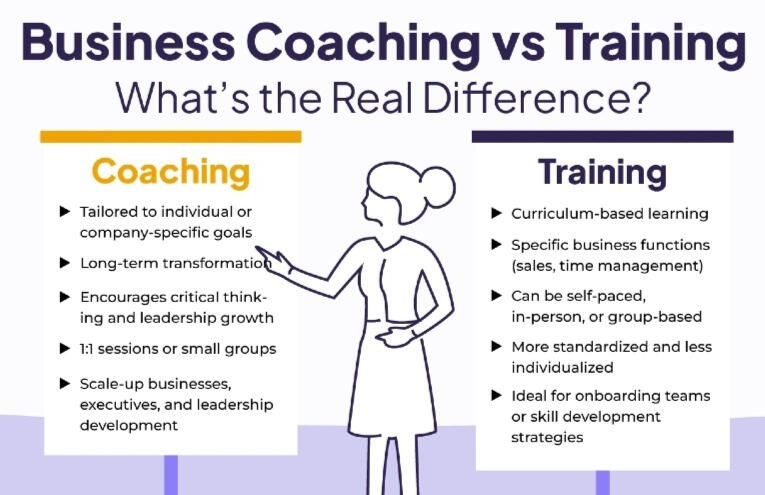
We often think of professional development as a ladder—just another set of rungs to climb. But in today’s fast-moving world, it’s actually more like a compass. Whether you’re navigating a corporate career or building your own brand, the way you choose to learn can completely change where you land.Why Learning Matters for OwnersFor a business owner, staying sharp isn't just about personal growth; it’s about risk mitigation. A gap in what you know isn't just a minor oversight—it’s a potential weak spot for your entire business. Investing in yourself helps in two big ways:* Smoother Operations: Instead of wasting time on "trial and error," the right training helps you build a leaner, more profitable engine from day one. It moves you from just "getting things done" to building systems that actually scale.* The Big Shift: Most people start a business because they’re great at a specific craft. But running a company requires a total shift from being a "doer" to being a "leader." Learning how to communicate, resolve conflict, and delegate is often what separates a struggling solo act from a thriving organization.The Real Cost of Doing NothingThe scariest part of skipping development is the opportunity cost. Skills have a shorter shelf life than ever—what was cutting-edge a few years ago might be automated today. By committing to being a "perpetual student," you ensure you’re the architect of your own path rather than just a passenger.Think of professional development as career insurance. It gives you the flexibility to pivot when the market shifts and the confidence to lead when a new door opens. It’s not a distraction from the "real work"; it’s the engine that keeps your business resilient, competitive, and ready for whatever comes next.
INSIGHTS & INFORMATION
"Business Resources for Entrepreneurial Military Veterans" (Business.com) - A comprehensive 2026 guide that breaks down the best mentorship programs by industry, including tech-specific support from VetsinTech and general business guidance from SCORE.
How Business Leaders Can Help Revitalize Veteran Entrepreneurship" (Forbes) - This piece explores the 2026 trend of "Corporate Matchmaking," where Fortune 500 leaders develop tailored mentorship tracks to help veteran founders build high-level industry networks.
"Warrior Rising: Graduating from Employee to CEO in 2026" (Warrior Rising) - A deep dive into the "Six-Step Business Development Pathway," showing how they use a combination of group coaching and 1-on-1 mentorship to help veterans overcome the obstacles of early-stage ownership.
"Veteran EDGE 2026: Scaling the Multi-Million Dollar Business" (IVMF) - Focuses on advanced mentorship for established businesses. This article details the 2026 conference and growth sessions led by industry experts from JPMorgan Chase, Walmart, and Wells Fargo.
"The StreetWise MBA: VETRN’s 2026 Growth Blueprint" (VETRN) - Details how this free executive-level program uses mentorship to help established veteran business owners (with $100k+ revenue) scale their operations and professionalize their leadership.
How Mentors Help Veterans Succeed as Entrepreneurs" (DAV, Feb 2026) - An updated look at how programs like Patriot Boot Camp provide the "cheat codes" for modern entrepreneurship through peer-to-peer mentoring.
11 Free Programs To Help Veterans Succeed As Entrepreneurs" (HelpVet, Jan 2026) - A ranking of the top 2026 no-cost programs, focusing on low-barrier entry points for those from diverse or marginalized backgrounds.
Top 100 Business Coach Influencers in 2026 - Business Coach Influencers Directory | Curated by Feedspot, this index lists the top 100 business coaches on Instagram for 2026. It provides comprehensive profiles and metrics to help entrepreneurs find expert mentorship and collaborative opportunities for brand growth.
Business Leaders You Should Follow In 2026 (USA Today) - Visionary Leaders to Watch in 2026 | USA Today’s contributor feature spotlights the most influential figures shaping the 2026 business landscape. From AI pioneers to finance experts, these leaders offer critical insights for anyone looking to scale a venture in the coming year.
The Top 10 Mentors Shaping Today’s Entrepreneurs (Entrepreneur.com) - Entrepreneur Magazine spotlights ten influential figures redefining modern mentorship. The article highlights experts who provide the strategic frameworks and leadership guidance necessary for today’s founders to navigate and scale new ventures.
How Can I Find the Right Business Coach in 2026? - Eric Partaker’s blog provides a deep dive into the benefits of business coaching. It outlines how specialized guidance helps founders master leadership, optimize productivity, and scale companies through proven strategic frameworks.
The New Way to Start Your Business in 2026 - Small Business Coach highlights modernized strategies for launching ventures in 2026. It focuses on leveraging digital tools and innovative frameworks to help entrepreneurs build sustainable, future-ready business models.
👁️ Kickstart Your 2026: The Ultimate Business Growth Guide | Grant Cardone - Grant Cardone’s video outlines a strategic roadmap for 2026, focusing on scaling ventures through "omnipresence" and cash flow. It offers guidance on marketing systems and leadership to help founders achieve growth.